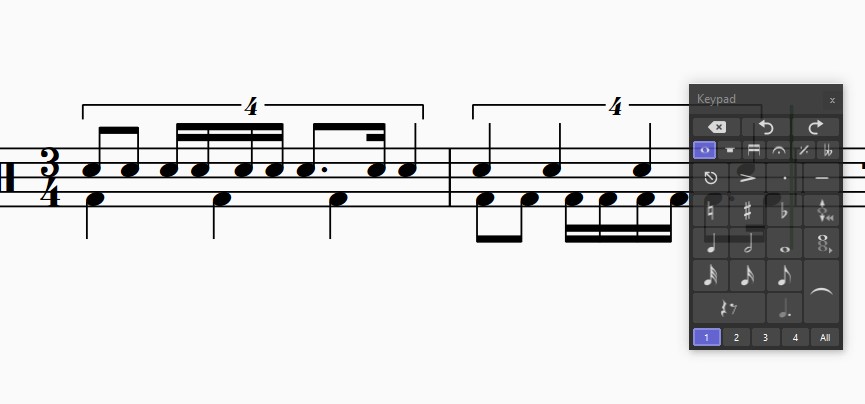
Polyrhythms are a powerful and a great musical device. Whether you're composing or practicing, learning how to write and perform rhythms that move independently of the time signature can add depth and complexity to your work.
In this article, we’ll look at a simple and practical example: writing a 4-against-3 polyrhythm in Sibelius.
Adding a 4-Against-3 Rhythmic Pattern
To write against the time signature grid in Sibelius, you’ll need to use a custom tuplet.
Follow these steps:
-
Go to Note Input → Tuplets → Other
-
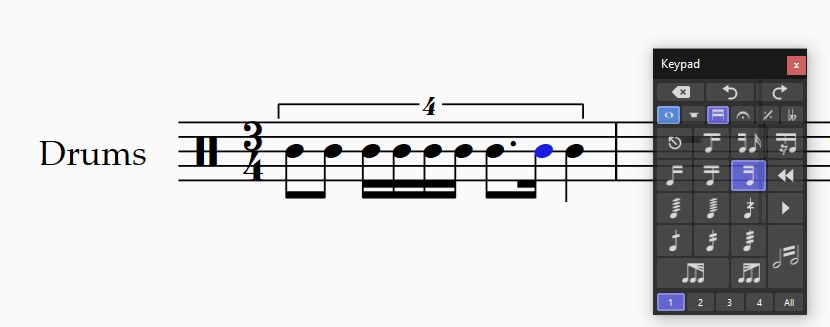
In the Tuplet window, enter the ratio 4:3
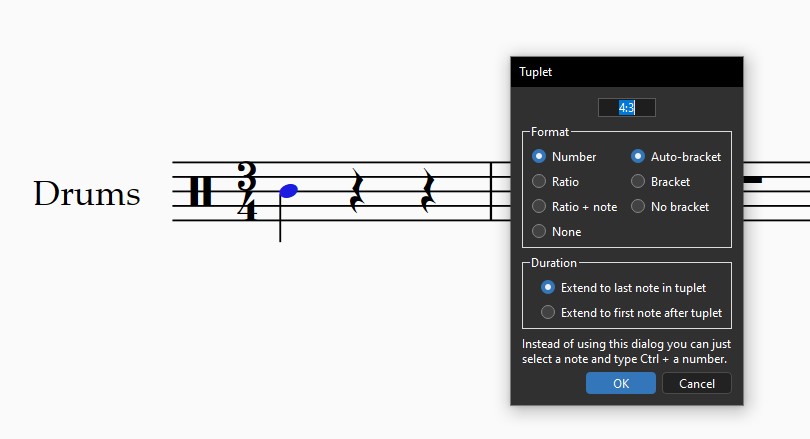
This means that four quarter notes will fit into the space of three, creating a 4-against-3 polyrhythmic structure.
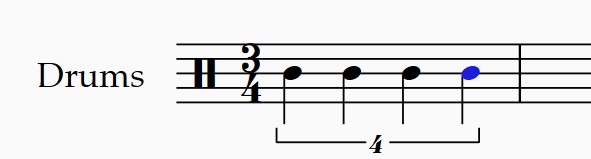
Shaping the Rhythm
Once the tuplet is created, you can enter any rhythmic pattern within those four notes To improve readability, consider using beam properties in the keypad. This allows you to create clear visual groupings and help performers interpret the pattern more easily.
Combining Rhythms
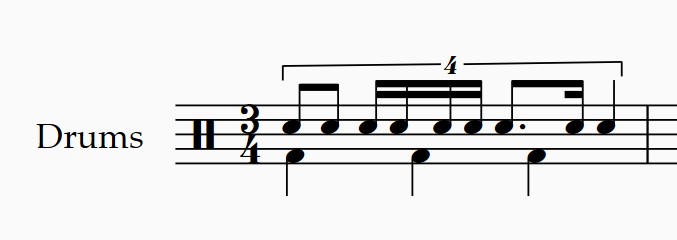
To layer this polyrhythm against the standard rhythm that follows the time signature, use multiple voices. This keeps each rhythmic layer visually distinct.
A Faster Way to Create Complex Rhythms
While tuplets are powerful, creating complex rhythms manually can take time.
If you frequently work with polyrhythms or advanced rhythmic structures, you may benefit from using a custom tool designed specifically for rhythm creation. These tools can streamline your workflow and make intricate patterns much easier to manage.
Visit our Custom Tool Program to learn more or submit an inquiry.